



How to Build a Multi-Photographer Studio Team
Every solo photographer eventually hits the same Saturday. Two inquiries land for the same date, both clients you’d love to work with, and you have to turn one away. That lost booking isn’t a scheduling problem. It’s a ceiling.
I started Mycah Bain Photography in Minneapolis 14 years ago, and today we run a multi-photographer studio with a 12-person team across brand, senior, wedding, and family work. None of it happened because I got lucky with hiring. It happened because I built the business so it could work without me holding the camera every time.
Here’s what actually matters when you build a team, including the parts most photographers get backwards.


Build Your Photography Team Around Systems First
Most photographers think the first step is finding another great shooter. It’s not. If your inquiries, contracts, galleries, and client communication live in your head, a second photographer just doubles the chaos.
Before you bring anyone on, write down how a session actually runs from the first email to the final gallery. What does the inquiry response say? When does the questionnaire go out? How many images does a client receive, and how fast? Your photography team can only deliver a consistent experience if that experience exists on paper.
Here’s the counterintuitive part. Your first hire probably shouldn’t be a photographer at all. An editor or an operations person buys back the hours that are quietly keeping you from booking more sessions. Editing and admin eat more of a solo photographer’s week than shooting does, so hand those off first and use the freed-up time to sell.
I talked through this order of operations in an earlier conversation about growing your business through hiring and outsourcing, and it still holds up. Support roles first, shooters second.

Hiring Associate Photographers Who Actually Fit
Once your systems hold up, you can hire shooters. Look for two things above everything else: how someone makes people feel, and whether they’re coachable.
Technical skill matters, but you can train lighting and posing. You can’t train someone to make a nervous senior relax or to read a room at a wedding reception. Those instincts show up in the first ten minutes of an interview, so pay attention to them.
Before anyone leads a session on their own, have them second shoot with you first. You’ll see their work ethic, how they handle a shoot that goes sideways, and how they talk to clients. A portfolio can’t show you any of that.
You should also hire for range, not clones of yourself. One of our lead photographers brought 17 years of experience with food and beverage work before joining us. That depth made our whole brand photography offering stronger. Look for people who fill gaps in your skill set instead of mirroring it.
Finally, get clear on how you’re structuring the relationship. Most photography studios work with contractors, and the line between a contractor and an employee has real legal weight. The IRS guidance on independent contractors versus employees is the place to start, and a conversation with your CPA should come right after.


Letting Go of Being the Product
This is the hardest part, and it’s the reason most studios stall at two or three people.
When your business carries your name, clients book you. So when you start sending other photographers to sessions, it feels like you’re handing over something personal. Some owners respond by quietly keeping every important client for themselves. That move keeps the business tied to one person’s calendar forever.
The shift is moving client trust from you to the experience. Clients don’t need you specifically behind the camera. They need to know exactly what’s going to happen, feel taken care of the whole way through, and love their photos at the end. If your systems deliver that, any well-trained photographer on your team can deliver it too.
A few things helped me make that shift:
- Introduce your photographers by name on your website, so clients meet them before they ever book. → meet our team
- Stop writing “I” in every client email when “we” is the truth.
- Review galleries together in the early months so your team learns your standard by seeing it, not guessing at it.
Letting go doesn’t mean lowering the bar. It means teaching the bar so clearly that it doesn’t need you standing next to it.


What a Multi-Photographer Studio Looks Like 14 Years In
People often picture a multi-photographer studio as a group of shooters sharing a calendar. Ours looks different, and a big part of the team never picks up a camera for a client session.
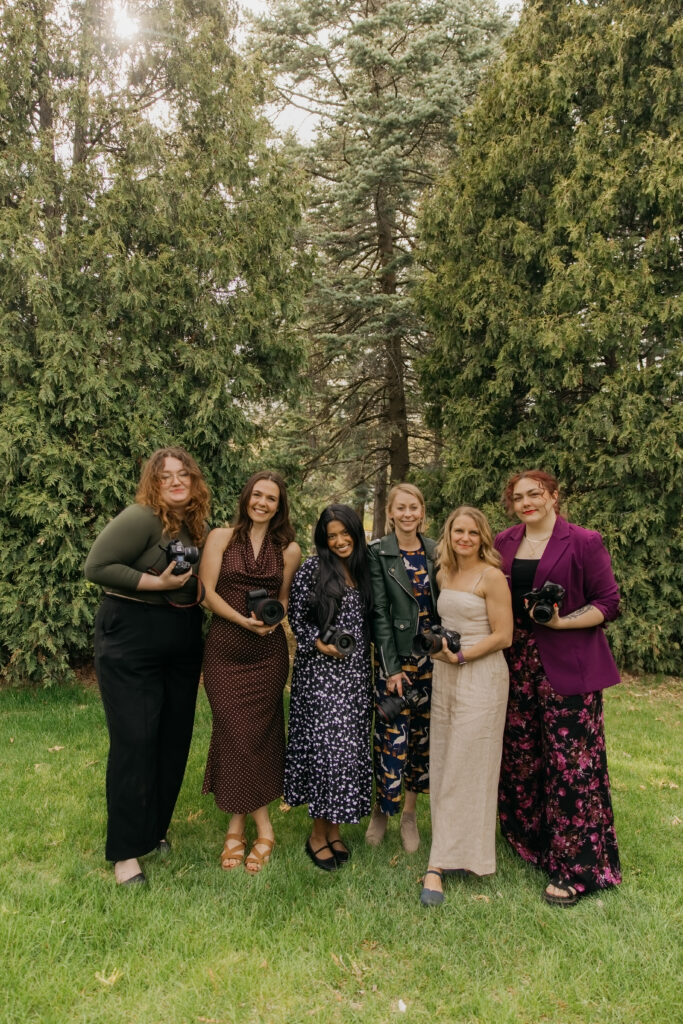
Today our team includes lead photographers who each specialize across our service lines, plus editors, marketing support, operations, and outreach. Some of our team works remotely from the Philippines, which lets us keep editing and admin moving while Minneapolis sleeps. My role has shifted from doing the work to designing how the work gets done.
That structure is what makes growth possible. When one photographer is booked, another can take the session. When I step away to coach or travel, the studio keeps running. And clients get a team that knows Minneapolis venues, neighborhoods, and light inside and out.
Whether you shoot in Minneapolis or anywhere else, the blueprint is the same. Systems first, support roles second, shooters third, and your ego somewhere near the back.


Ready to Build Your Team?
If you’re tired of being the only person who can run your business, you don’t need another year of hustling harder. You need a plan for who to hire, in what order, and how to train them so your standard holds.
I coach creative entrepreneurs through exactly this, from pricing and systems to building a team that supports the life you actually want. Explore coaching and free resources for photographers on our education page. Coaching for creative entrepreneurs
Start with one hire. Then build from there.


+ show Comments
- Hide Comments
add a comment